

Kaindy Lake: The Sunken Forest Explained
Kaindy Lake is a narrow mountain lake in southeast Kazakhstan where the bare trunks of a drowned spruce forest stand upright out of clear turquoise water. The trees were alive when an earthquake in 1911 flooded their valley, and the cold water has kept them standing ever since. That single scene, pale spires rising from a bright green surface with living forest on the slopes behind, is what draws travelers along a long rough road to reach it.
The lake belongs to Kolsai Lakes National Park in the Almaty Region, deep in the northern Tian Shan mountains. It is small by any measure, roughly 400 meters long and a little over 100 meters wide, yet it has become one of the most photographed natural sites in the country. This guide explains how the sunken forest came to be, how to get there from Almaty, when the water looks its best, and how to combine the visit with the nearby Kolsai Lakes.
The Story Behind Kaindy Lake's Submerged Spruce Trees
The trees in the water are Schrenk's spruce, also called Tian Shan spruce (Picea schrenkiana), the tall dark conifer that covers the surrounding slopes. Before the lake existed, these spruces grew on the floor of a gorge. When the valley flooded, the lower trunks were submerged while the upper sections stayed above the surface, where the needles and branches eventually dropped away and left the bare poles you see today.
What makes Kaindy unusual is the state of the submerged wood. The lake water stays cold all year, around 3 to 6 degrees Celsius even in summer, which slows decay dramatically. Below the surface, divers report that the drowned trunks still carry their branches and needles, preserved like a forest frozen in place. Above the waterline the exposed wood has bleached to a pale grey, which is why the lake is often described as a sunken or underwater forest. For a plain summary of the site and its designation, the Astana Times reported that Kolsai Lakes National Park, which contains Kaindy, joined the UNESCO World Network of Biosphere Reserves in 2021 and sits about 300 kilometers from Almaty.
How the 1911 Earthquake Created This Landscape
Kaindy is a landslide lake, and its origin traces back to a major earthquake that struck the region in January 1911. The quake, often called the Kebin or Chon-Kemin earthquake, was one of the largest to hit the northern Tian Shan in recorded history, strong enough to reshape river valleys and trigger slides across a wide area.
In the Kaindy gorge, the shaking loosened a mass of limestone that slid down and blocked the narrow valley. That natural dam trapped the stream flowing through the gorge, and over the following seasons meltwater and rainfall backed up behind it. The rising water slowly drowned the stand of spruce growing on the valley floor. The result is a lake held in place not by a concrete wall but by a century-old rockfall, with a forest still rooted beneath its surface.
Because the dam is natural debris rather than engineered structure, the lake's exact level shifts with the seasons. Wet years raise the surface and submerge more of the trunks; dry spells lower it and expose more bleached wood. No two visits look quite the same.
Getting to Kaindy From Almaty and Road Conditions
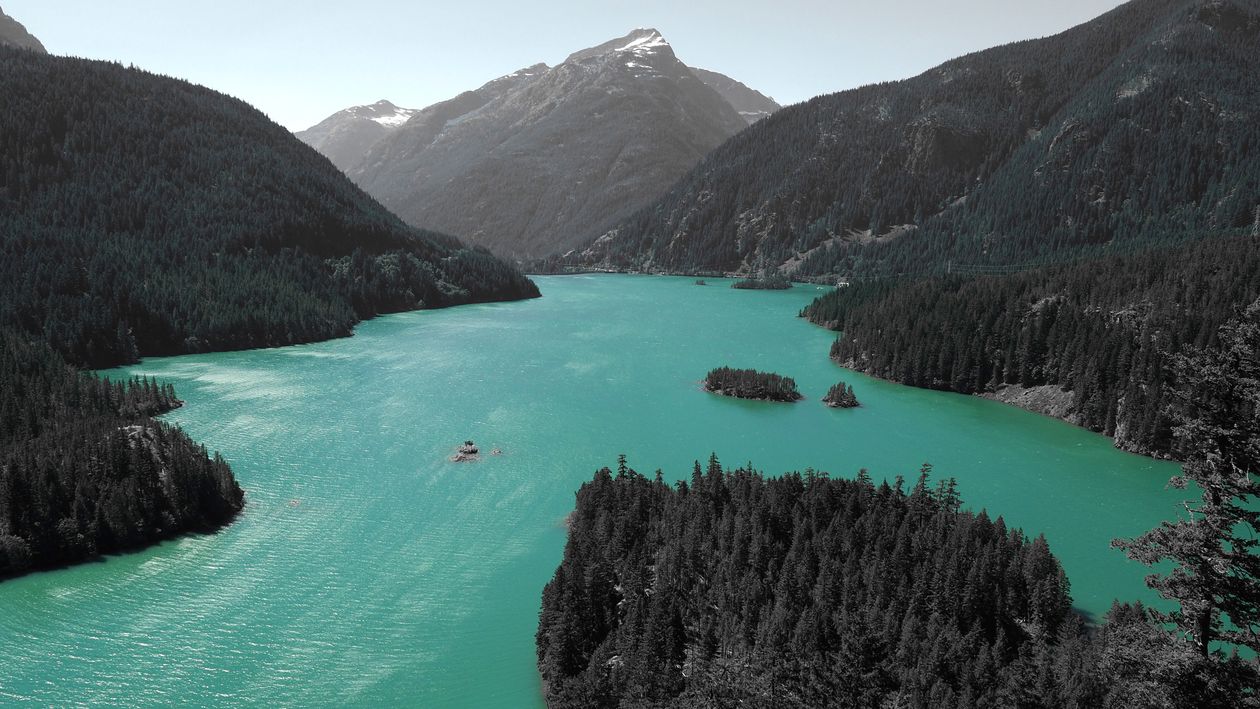
Kaindy sits roughly 280 to 300 kilometers southeast of Almaty, and reaching it takes most of a day. Plan on five to seven hours of driving one way depending on conditions and stops. The first stretch is straightforward paved highway toward the village of Saty, the main gateway settlement for both Kaindy and the Kolsai Lakes.
The difficulty begins after Saty. The final approach to Kaindy follows an unpaved mountain track that climbs through the gorge, and it is rough, narrow, and prone to washouts after rain. Ordinary cars cannot make the last section. Visitors either switch to a local four wheel drive vehicle for the final leg or walk the last few kilometers up to the lake. Even in a capable vehicle this stretch is slow going, so do not underestimate the time it adds.
Because the day is long and the route ends on demanding terrain, many visitors travel with a driver or a guide rather than attempting it in a rental car. If you would rather not manage the logistics yourself, a planned excursion handles the permits, the mountain transfer, and the timing. This is exactly the kind of multi-stop mountain trip that Travelinalmaty builds for visitors, and our overview of what to expect from guided tours in Kazakhstan explains how a typical day to the region is structured. Entry to the national park requires a small fee paid at the checkpoint near Saty, so carry some cash in the local currency.
Best Season for Clear Turquoise Water Views
The turquoise color that makes Kaindy famous depends on clear water and good light, and both are most reliable from late spring through early autumn. Summer is the peak window. The air can reach the low 20s Celsius, the road is at its most passable, and settled dry weather keeps sediment from clouding the lake, which brings out the vivid green blue tone against the pale trunks.
Early autumn is a strong alternative. The crowds thin out, the surrounding spruce and larch slopes pick up color, and the water often stays clear well into the season. The trade off is cooler temperatures and a higher chance of an early mountain storm closing the road.
Winter transforms the site entirely. The surface can freeze solid enough for ice diving and ice skating among the submerged trunks, which is a genuinely rare experience, but the mountain track becomes hazardous and access is limited. Spring thaw is the weakest window for scenery: meltwater runs high and murky, and the road is at its muddiest. If your main goal is the postcard turquoise view, aim for July through September.
Combining Kaindy With Kolsai Lakes in One Trip
Kaindy and the Kolsai Lakes share the same national park, the same gateway village of Saty, and the same long approach road, which makes visiting them separately a waste of a hard-won drive. Pairing them is the standard and most sensible plan.
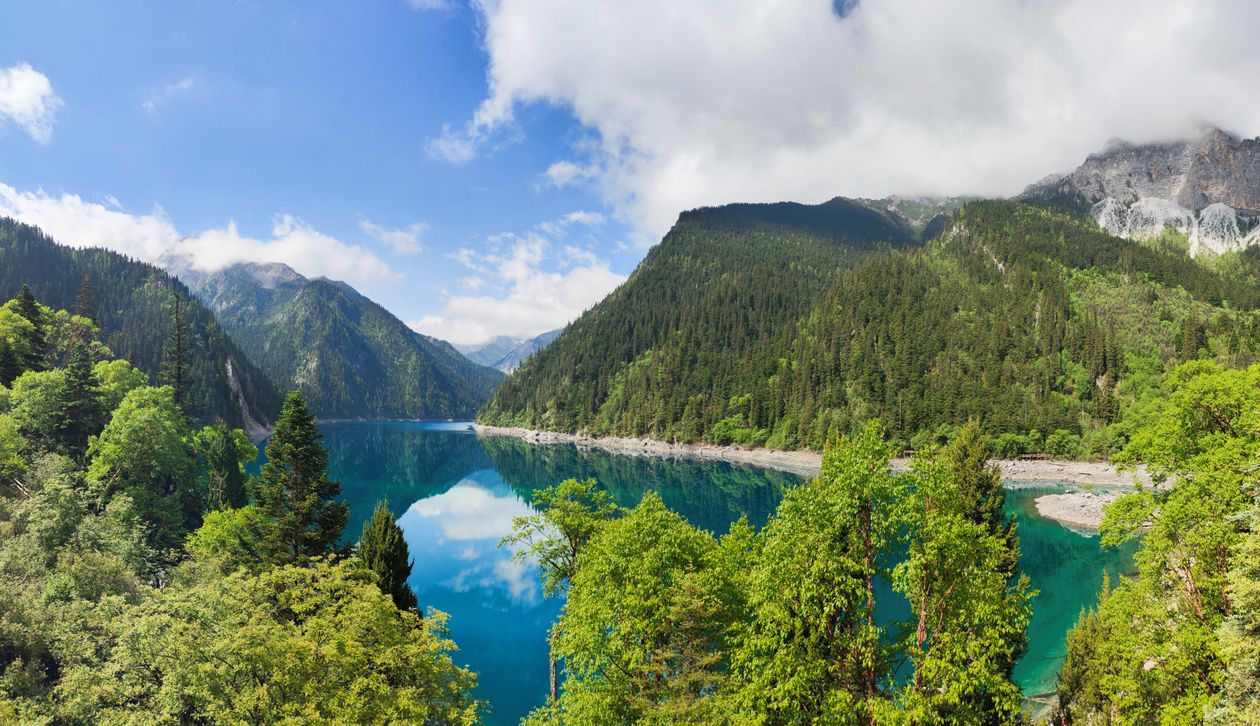
The Kolsai Lakes are a chain of three alpine lakes strung up a forested valley. The lowest lake is easy to reach and sits near a cluster of guesthouses in and around Saty, while the upper lakes require a steady uphill hike. A common rhythm is to drive out from Almaty, see Kaindy on the first afternoon, stay overnight in a Saty guesthouse, and spend the next day hiking the Kolsai valley before the long return drive. Trying to fit both lakes and the round trip into a single day is possible but exhausting and leaves little time at either site.
If you are planning the Kolsai portion, our Kolsai Lakes hiking guide covers the trail options, distances, and where to stay. Many travelers extend the route further east to add Charyn Canyon, since the three sites together make a classic two or three day loop out of Almaty through the region's best known landscapes.
An overnight stay also solves the biggest practical problem with Kaindy: the lake is simply too far for a comfortable single day from the city. Breaking the trip in Saty turns a punishing dash into a relaxed itinerary, and it puts you at the lakes early, before day groups arrive and before afternoon clouds build over the peaks.
Planning Your Visit
Kaindy rewards the effort it demands. The drive is long, the final track is rough, and the water is far too cold for a casual swim, but standing at the edge of a lake full of century-old drowned spruce is a sight you will not find anywhere else in Central Asia. Decide your dates around the summer window, build in an overnight at Saty, and treat Kaindy as one stop on a Kolsai and Charyn loop rather than a destination on its own. If you would rather hand the driving, permits, and mountain transfers to someone who runs the route regularly, start by mapping out the trip with Travelinalmaty and lock in the season that gives you the clearest water.
Frequently asked questions
What is Kaindy Lake famous for?
Kaindy Lake is famous for the bleached trunks of a drowned spruce forest that rise straight out of its turquoise water. The cold temperature has preserved the submerged trees for more than a century.
How was Kaindy Lake formed?
A strong earthquake in 1911 set off a limestone landslide that blocked a mountain gorge. Meltwater and rain filled the basin behind the natural dam, flooding the spruce forest that grew there.
How far is Kaindy Lake from Almaty?
Kaindy Lake is roughly 280 to 300 kilometers from Almaty. The journey takes about five to seven hours one way, including a rough final stretch that usually requires a four wheel drive vehicle.
When is the best time to visit Kaindy Lake?
Summer and early autumn are best. Dry weather keeps the water clear and turquoise, and the mountain road is far more reliable than in winter or during spring thaw.